Fire Restoration Methods and Equipment, Nationwide
Dry ice and soda blasting, HEPA air scrubbing, hydroxyl and thermal fogging, ultrasonic cleaning, encapsulation and testing explained.
Call now, 24/7
Tell the operator your city, what happened and whether the fire department has cleared the building. You will be connected with a local provider that covers your area.
(833) 917-4160Fire damage? Call now, 24/7
- Give your city and ZIP code
- Say what happened and whether the fire is out
- Ask the company about its license and insurance
Quick answer
Professional fire restoration uses different tools for different damage: blasting for char on framing, HEPA air scrubbers for airborne particles, fogging or hydroxyl for odor, ultrasonic tanks for hard goods and sealers for what cleaning cannot reach. Call (833) 917-4160 to reach a local company that can explain which methods fit your loss.
Why the method matters
No single tool fixes a fire loss. Dry soot, greasy residue, charred framing, odor in porous materials and contaminated air each respond to different treatments. Using the wrong one can smear residue, damage finishes or leave odor behind. A trained crew picks methods after inspecting the building and, where appropriate, testing surfaces.
Removing char and heavy residue
- Dry ice blasting propels solid carbon dioxide pellets that turn to gas on impact. It can lift soot and char from wood framing without leaving blasting media behind. Crews ventilate the space because carbon dioxide displaces air.
- Soda blasting uses sodium bicarbonate as the media. It can clean charred wood and soot from surfaces, but the powder must be cleaned up afterward.
- Wood char scraping and sealing removes loose char from framing and treats what remains so odor does not return.
- Structural washing and degreasing removes oily smoke film from walls, ceilings and hard surfaces after dry soot is lifted.
Cleaning the air
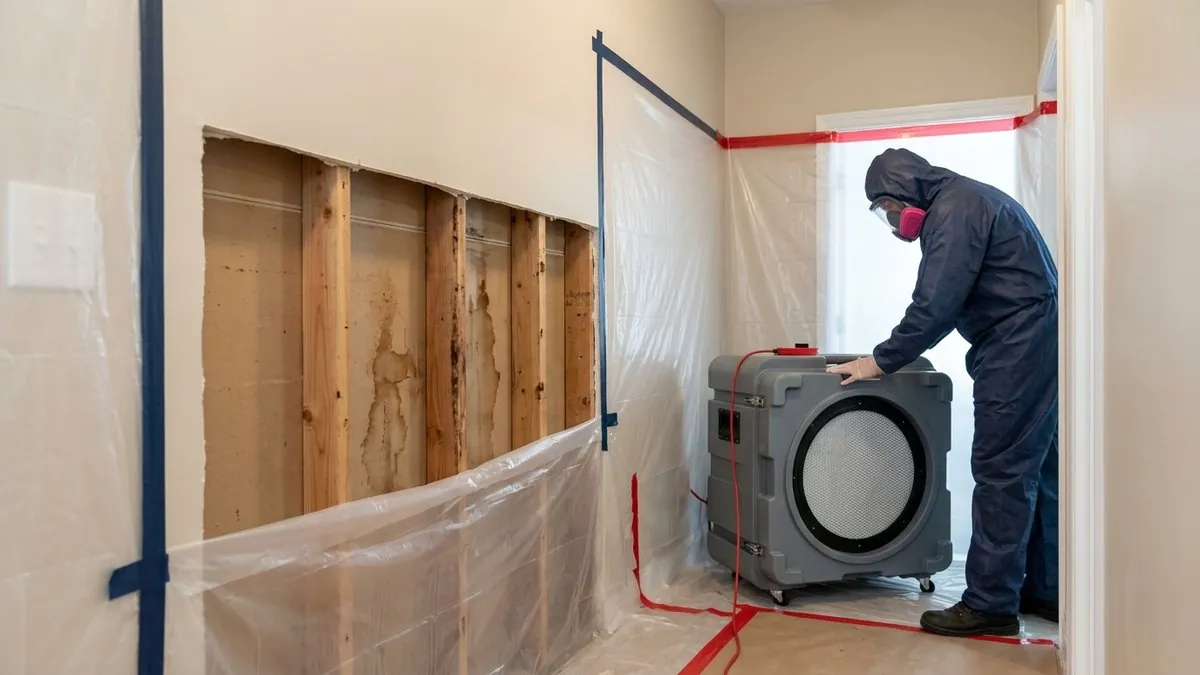
- HEPA air scrubbers filter fine particles from the air during demolition and cleaning. Units with activated carbon also reduce some odors.
- Negative air and containment use plastic barriers and exhaust to keep residue from spreading into clean rooms.
- HVAC sealing and cleaning protects ducts during work and cleans the system if smoke or soot entered it.
The U.S. EPA notes that filtration and controlling pollutant sources are core ways to improve indoor air quality.
Treating odor
- Thermal fogging carries deodorizing chemistry into the same small spaces smoke entered.
- Hydroxyl generators create hydroxyl radicals that break down odor molecules and are used in many restoration jobs.
- Ozone treatment can neutralize odors in an empty building, but ozone is a lung irritant. The EPA cautions against using ozone generators where people or pets are present.
- Counteractant chemistry is matched to the residue, for example kitchen protein film versus plastic smoke.
Sealing and priming
When odor remains in structural wood after cleaning, a sealing primer or encapsulating coating can lock it in before finish work. Shellac based and other odor blocking primers are common choices for stained or smoky surfaces. Sealing works best after residue has been cleaned, not instead of cleaning.
Contents cleaning and testing
- Ultrasonic cleaning uses sound waves in a bath to clean hard goods and small items.
- Surface sampling such as wipe or tape lift checks can help confirm residue type and whether cleaning worked.
- Air quality checks by an indoor environmental professional may be used in sensitive buildings. See our guide on post fire air quality.
Questions to ask a company
- Which methods do you plan to use and why?
- How will you protect rooms that are not damaged?
- Will you use ozone and how will occupants and pets be protected?
- How will you confirm that cleaning and odor treatment worked?
Air filtration in more detail
Sub micron particulate air filtration uses HEPA filters that capture very fine particles from the air during cleaning and demolition. An air scrubber with charcoal filters adds activated carbon that helps with smoke odors and gases that a particle filter alone does not catch. Structural chemical degreasing is the wet cleaning step for oily residue on walls, ceilings and framing after dry soot is removed.
For heating systems, furnace smoke vent decontamination cleans vents, returns and ducts that carried smoke, and filters are replaced.
24/7 help and where we serve
This service is part of our nationwide network of professional fire and smoke damage restoration. The phone line, (833) 917-4160, is answered 24/7, and the operator connects you with an independent company that covers your ZIP code. Browse all locations or choose a state.
Find help in your state
Popular cities
Frequently asked questions
Is dry ice blasting safe for my framing?
It is commonly used because it does not leave media behind and is gentler than abrasive blasting, but results depend on the wood and the damage. Ask the crew how they protect surfaces and ventilate.
Which is better for smoke odor, hydroxyl or ozone?
It depends on the building and whether it is occupied. Hydroxyl units are used in many jobs, while ozone needs an empty building. A good company explains the choice and the safety steps.
Can odor be sealed in instead of cleaned?
Sealing is a last step after cleaning. Painting or sealing over residue usually lets the smell return.
Do I need testing?
Not always. Sensitive buildings, disputes about cleanliness or health concerns are reasons to ask about testing.
Sources and standards
Need this service now?
Call 24/7 to be connected with an independent local company.