Emergency Fire Damage Cleanup, Nationwide
The first days after the fire department leaves: securing the property, removing debris and stopping further damage.
Call toll free now
Tell the operator your city, what happened and whether the fire department has cleared the building. You will be connected with a local provider that covers your area.
(833) 917-4160Fire damage? Call toll free now
- Give your city and ZIP code
- Say what happened and whether the fire is out
- Ask the company about its license and insurance
Quick answer
Once the fire department says the building is safe to enter, call (833) 917-4160. A local restoration company can secure the property, remove wet debris, contain soot and document the damage so a fire does not turn into a second round of damage from weather, moisture and acidic residue.
What emergency fire damage cleanup includes
Emergency cleanup is the stabilization stage. The flames are out, but the building is still changing. Wet insulation, ash, broken windows and open roof sections all keep causing harm until someone stops them. A restoration crew usually starts with a walkthrough, then works through the items that cannot wait.
- Securing openings with board up panels and roof tarps
- Removing standing water left by hoses and sprinklers
- Clearing unsafe debris and wet, burned materials
- Turning off or isolating the heating and cooling system so smoke does not travel through ducts
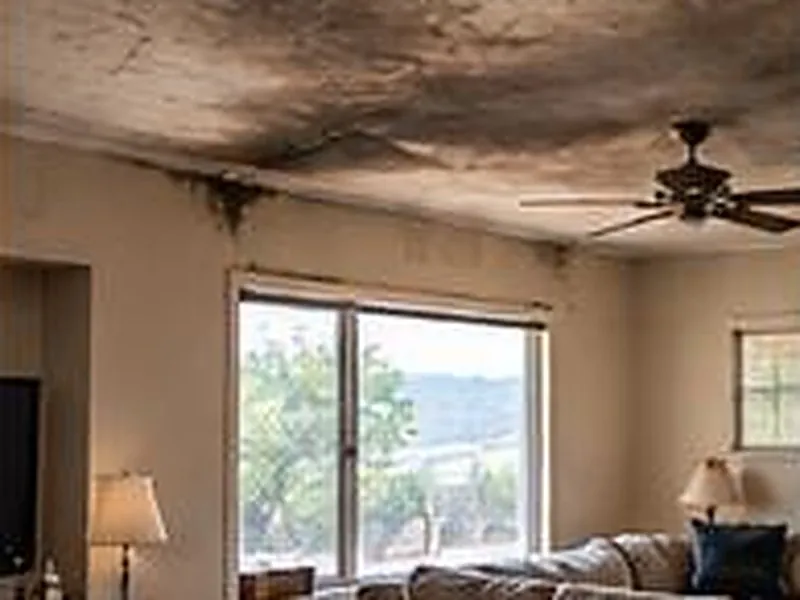
- Starting soot and smoke assessment room by room
- Protecting undamaged furniture and flooring with covers or moving it out
- Photographing and documenting damage for your insurer
Why the first 48 hours matter
Soot is not just dirt. It is acidic residue that can discolor, etch and corrode surfaces, and the longer it sits the harder it is to clean. Metal fixtures, appliance finishes and porcelain are especially sensitive. At the same time, water from firefighting soaks drywall, insulation and subfloors. The U.S. Environmental Protection Agency notes that mold can begin growing on wet materials within 24 to 48 hours, so drying cannot wait for the cleanup plan to be finished.
Weather is the third pressure. A burned roof or broken window lets rain, snow and wind into a building that already has weakened materials. Quick tarping and board up work often limits the final repair bill.
What to do before the crew arrives
- Wait for clearance. Do not go in until the fire department says it is safe. Structures can have weakened floors, stairs and ceilings.
- Call your insurance company. Ask what to do first and whether they have preferred vendors. You are free to ask questions about any company that calls you.
- Do not turn on power, gas or the HVAC system. Wait for utilities and an electrician to confirm everything is safe.
- Avoid touching soot covered surfaces. Oils from your hands can set soot into porous materials.
- Photograph and film everything. Do this from a safe position, before anything is moved.
- Keep receipts. Hotel, food, board up and emergency supply costs may be reimbursable under your policy.
The American Red Cross also recommends contacting them for shelter, food and clothing if you cannot stay in your home, and storing important documents in a safe place once you recover them.
How the process usually runs
- Intake call. You describe the loss, location and whether anyone needs a place to stay.
- On site assessment. The crew inspects structure, water, soot and smoke spread.
- Stabilization. Boarding, tarping, water removal and debris clearing.
- Soot containment. Air filtration and cleaning begin in the most affected rooms.
- Written scope. The company explains what will be cleaned, what should be replaced and what the work is expected to cost.
- Cleaning, deodorizing and repair. Longer work follows once the property is stable.
What to ask the company that calls you back
- Do you hold a license where one is required for this work in my state?
- Can you send proof of liability insurance?
- Do your technicians have IICRC fire and smoke training?
- Will I get a written scope and estimate before work begins?
- How do you handle my insurance paperwork and who bills whom?
- When can a crew be on site and who will be my point of contact?
Find help in your state
Popular cities
Frequently asked questions
How soon should emergency fire cleanup start?
As soon as the fire department allows entry. Board up, water removal and soot containment are time sensitive, and waiting increases the risk of corrosion, mold and weather damage.
Do I have to wait for my insurance adjuster?
Call your insurer right away, but protect the property while you wait. Most policies expect you to take reasonable steps to prevent further damage. Photograph everything first and keep receipts for emergency work.
Can I stay in the house during cleanup?
Often not at first. Smoke residue, debris, damaged utilities and cleaning products can make a fire damaged home unhealthy. Ask your restoration company and fire department when it is safe to return.
Who performs the work?
An independent local restoration company. Fire Damage Restoration USA is a referral service that connects your call. Prices, scope and scheduling are set by the company.
Need this service now?
Call toll free to be connected with an independent local company.