Types of Soot and Smoke Residue Explained
Dry soot, wet smoke residue, protein residue and fuel oil soot: what each looks like, what causes it and why the cleaning method matters.
Call now, 24/7
Tell the operator your city, what happened and whether the fire department has cleared the building. You will be connected with a local provider that covers your area.
(833) 917-4160Fire damage? Call now, 24/7
- Give your city and ZIP code
- Say what happened and whether the fire is out
- Ask the company about its license and insurance
Quick answer
Different fires leave different residue. Dry soot, wet residue, protein residue and fuel oil soot behave differently, so each needs its own cleaning method. The wrong one can smear soot and make it harder to remove.
Dry soot
Dry soot comes from fast, hot fires that burn paper and wood. It is powdery and fairly easy to lift off surfaces, which is why professionals vacuum with HEPA equipment and use dry cleaning sponges before any wet cleaning. Wetting it too early can turn it into a smear.
Wet smoke residue
Low heat, smoldering fires in plastics, rubber and synthetic materials leave sticky, smeary residue with a strong, sharp odor. It spreads in layers and often needs degreasing cleaners and repeated passes. Porous materials may be better replaced than cleaned.
Protein residue
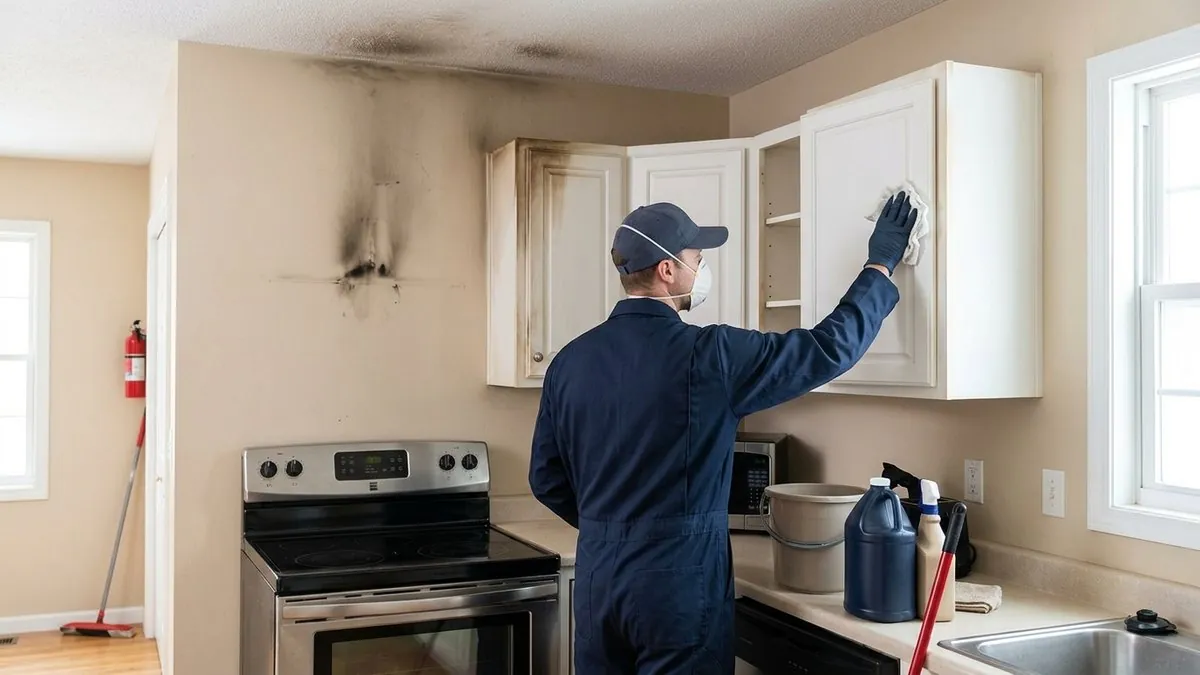
Burned meat, grease and food produce a thin, almost invisible film that can discolor paint and varnish and smell strongly. Kitchen fires are the usual cause. Because you may not see much, the smell is often the first sign that residue remains.
Fuel oil soot
A furnace puffback can send fine, oily soot through a building. It covers surfaces in a thin black film and often travels widely through ducts. It usually calls for containment and heavy cleaning.
Why it matters
The ANSI/IICRC S700 standard centers on assessing fire residues and odors and planning cleaning to match. Ask any company how it identified the residue on your surfaces and what method it chose. Mixed residues from multiple materials are common, so test results and surface checks matter.
Protein, grease and plastic residue
Protein smoke residue cleaning and greasy wet soot removal need degreasing, since the film is oily and nearly invisible. Plastic and synthetic residue is sticky and acidic, and dry wood smoke is powdery and cleaned dry first.
Sources and further reading
- IICRC: ANSI/IICRC S700 Standard for Professional Fire and Smoke Damage Restoration
- NFPA Research: Home Structure Fires (2019), via the Maine State Fire Marshal's Office
Related services
Need help now?
This guide is part of our resources on 24/7 fire damage removal and restoration. Browse locations we serve. Call 24/7 (833) 917-4160 to be connected with an independent local company. Browse fire damage services or find help in your state.