How to Get Smoke Smell Out of a House
Why smoke odor lingers after a fire and the correct order for removing it: source, residue, air and structure, plus what does not work.
Call toll free now
Tell the operator your city, what happened and whether the fire department has cleared the building. You will be connected with a local provider that covers your area.
(833) 917-4160Fire damage? Call toll free now
- Give your city and ZIP code
- Say what happened and whether the fire is out
- Ask the company about its license and insurance
Quick answer
Remove the burned materials, clean the soot and film from every surface, then treat the remaining odor in the air and structure and replace HVAC filters. Deodorizing without cleaning almost always fails because the residue keeps releasing smell.
Why it lingers
Smoke is made of particles and gases that soak into porous materials like drywall, carpet, upholstery and wood. Warm, humid days release trapped odor, and ducts can carry it into every room.
What to do, in order
- Remove burned and unsalvageable materials. They are the strongest source.
- Clean residue from surfaces. Use dry methods first for dry soot and degreasing cleaners for film.
- Clean or replace soft goods. Launder or dry clean clothing and linens and have upholstery and rugs professionally treated.
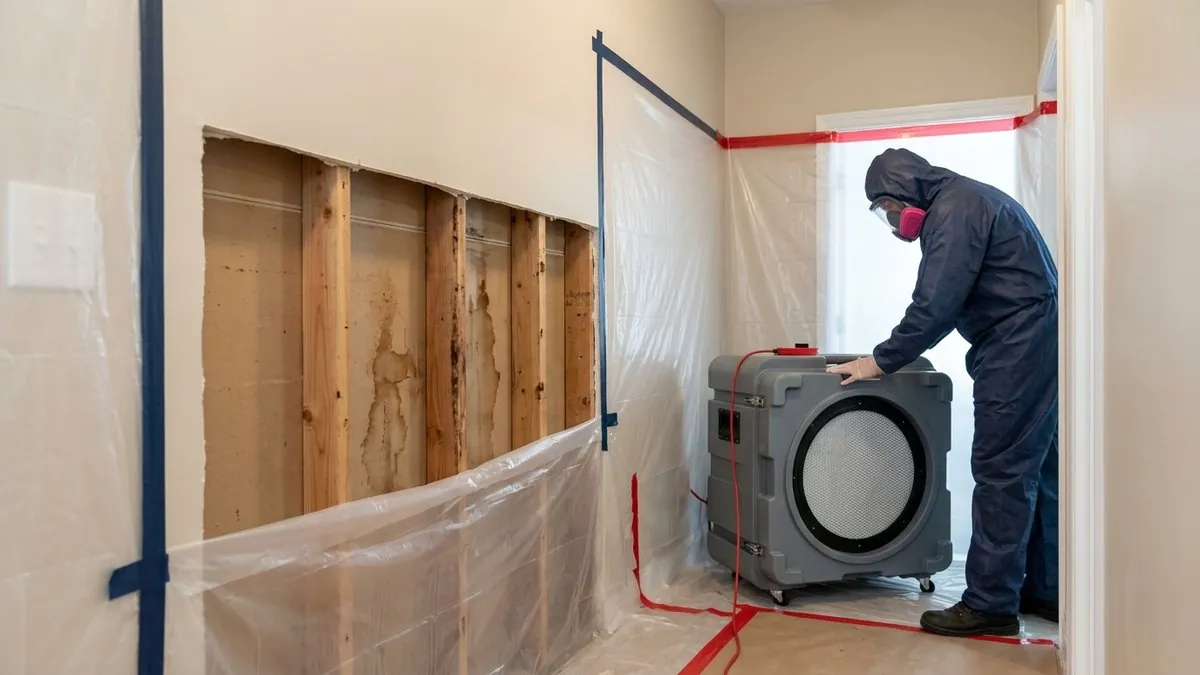
- Treat air and structure. Methods include thermal fogging, hydroxyl treatment, ozone in an empty building and HEPA and carbon air scrubbing.
- Replace HVAC filters and clean ducts if smoke entered the system.
- Seal where needed. A sealing primer on framing and subfloors can lock in residual odor before finish work.
What does not work well
- Candles, sprays and plug in fresheners that only cover the smell
- Open bowls of vinegar or baking soda, which can help a little with light odors but not heavy ones
- Painting over smoke stained walls without cleaning and sealing
- Ozone generators used while people, pets or plants are in the space. The EPA warns about ozone as a lung irritant.
When to call a professional
Call a company if the smell persists after cleaning, if smoke traveled through the ducts, if there is heavy soot or if the fire involved plastics, which produce harsher residue. They can match the treatment to the residue and odor source.
Sources and further reading
- IICRC: ANSI/IICRC S700 Standard for Professional Fire and Smoke Damage Restoration
- U.S. EPA: Indoor air quality
Related services
Need help now?
Call toll free (833) 917-4160 to be connected with an independent local company. Browse fire damage services or find help in your state.